Why Did One Small Change Affect Other Signals?

  • A community for building, creating, and growing with AI.

    Welcome to AI Forums, a community for people using AI to build products, automate workflows, create content, and grow businesses. Discuss vibe coding, AI agents, Claude Code, Codex, automation, AI tools, product launches, marketing, and the latest developments in AI.

    Join the Community (it's FREE)!

noahellis3362

New member
Messages
14
Ever changed one condition in a TradingView script and noticed unexpected results elsewhere?
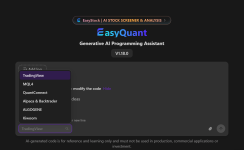
The condition may share logic with other signals. EasyQuant can help explain the code and suggest changes based on what you want to adjust. Specify what should change and what should stay the same, then compare the signals before and after testing.
How do you usually check that a small edit hasn’t changed the rest of your strategy?
2026-10-14 113616.png
 
In my C-based claims replay project, checking results against known expected totals helped catch changes that looked harmless in the code. I’d use the same approach here: keep the original script and compare signals on identical data and settings after each edit.

I’d especially check the bars where the changed condition takes effect. Similar overall returns can hide different entries and exits. It would be useful if EasyQuant showed those differences alongside its explanation of the edit.

Anyone interested in AI, tech, or just connecting, feel free to reach out anytime!
 
To add a bit more detail, EasyQuant can also help with an existing Pine Script when you only want to change one part of it. For example, you might want to add an alert when an entry condition is confirmed, add a filter to reduce repeated signals, or understand why an exit happens earlier than expected.

It helps to describe both what should change and what should stay the same: “Add an alert after the candle closes, but keep the existing entry and exit rules.” EasyQuant can explain the relevant logic and suggest a revision. You still need to review the code and compare its behavior before and after the change, since even a small edit can affect other signals.

When you modify a strategy, what usually takes longer: making the change itself or checking that the rest still works as intended?
 
Good
Hi, Noahellis
I am senior AI and cybersecurity engineer and team leader.
I would like to discuss and exchange idea and make friendship with you.
Can we talk on another chatting platform?
Do you use telegram or discord?
My telegram id: @phil1pxx
I am looking forward to your message
 
Reviewing AI-generated code matters, though it won’t necessarily fail just because time has passed. Updates are usually needed when requirements, dependencies, or platform behavior change. With EasyQuant, you can describe a specific Pine Script issue and ask for a targeted revision, then check it in TradingView. Comparing the signals before and after each change helps catch unintended effects.
 
Sometimes a signal appears on the chart, but the alert arrives at a different time. The condition may be checked during the candle or only after it closes. With EasyQuant, you can ask it to explain whether your Pine Script’s signal and alert logic match, then verify the behavior in TradingView. Do you usually wait for candle confirmation or use intrabar signals?
 
Back
Top