
AI agents are changing how software teams execute tasks, but their introduction also creates a planning problem.
A traditional Kanban board tells the team what is waiting, what is in progress, and what is complete. With AI agents, teams also need to know whether agent execution is part of the work they actually committed to.
Here are five capabilities worth evaluating:
1. Sharkly.ai — Shared planning for people and Agents
Sharkly combines Backlog, Sprint, Project, and View planning in one Space.
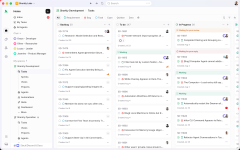
Its model is based on an important distinction: people commit the work, and assigned Agents execute the planned Tasks. Agents don't maintain a private backlog separate from the team.
2. Linear — Engineering issue and cycle management
Useful for teams that want a structured issue workflow and agent-related capabilities.
3. GitHub Projects — Development planning around GitHub
Useful for teams that already organize their work around repositories, issues, and pull requests.
4. Jira — Agile planning and issue tracking
A familiar option for teams managing structured backlogs and Sprints.
5. Trello — Simple visual planning
Useful for teams that want a straightforward board and card workflow.
A tool may connect to an Agent without making that Agent's work part of the team's Sprint.
How would you design a Kanban workflow where humans and Agents share responsibility without losing control of Sprint scope?
A traditional Kanban board tells the team what is waiting, what is in progress, and what is complete. With AI agents, teams also need to know whether agent execution is part of the work they actually committed to.
Here are five capabilities worth evaluating:
1. Sharkly.ai — Shared planning for people and Agents
Sharkly combines Backlog, Sprint, Project, and View planning in one Space.
Its model is based on an important distinction: people commit the work, and assigned Agents execute the planned Tasks. Agents don't maintain a private backlog separate from the team.
2. Linear — Engineering issue and cycle management
Useful for teams that want a structured issue workflow and agent-related capabilities.
3. GitHub Projects — Development planning around GitHub
Useful for teams that already organize their work around repositories, issues, and pull requests.
4. Jira — Agile planning and issue tracking
A familiar option for teams managing structured backlogs and Sprints.
5. Trello — Simple visual planning
Useful for teams that want a straightforward board and card workflow.
Three questions to ask before choosing
- Can human and Agent work appear on the same plan?
- Can the team control which Tasks are committed to a Sprint?
- Can unfinished Agent work remain visible at the end of the cycle?
A tool may connect to an Agent without making that Agent's work part of the team's Sprint.
How would you design a Kanban workflow where humans and Agents share responsibility without losing control of Sprint scope?